

Japanese Snake Tattoo (Hebi): Meaning, Myths and Sleeve Ideas for Perth
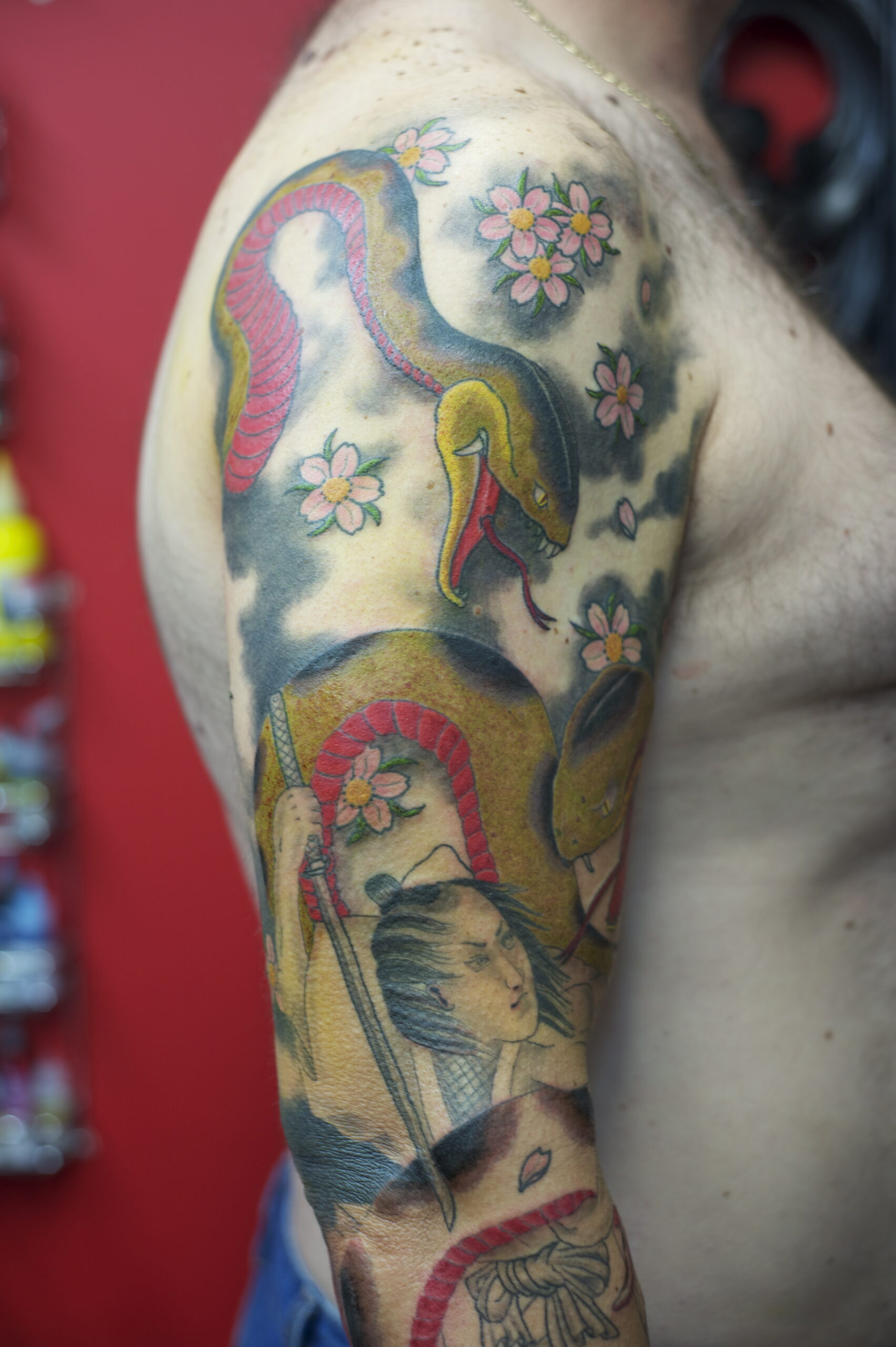
In Japanese tattooing the snake, or hebi, is one of the most flexible subjects you can choose. It can coil around a forearm, climb a calf, wrap a full leg or curl through a back piece, and it carries a long history in Japanese belief: water gods, shrine messengers, wealth, renewal and one very famous eight-headed monster. Here is what the Japanese snake tattoo means, where those meanings come from, and how we design hebi tattoos for clients in Perth, regional Western Australia and across Australia.
The snake in Japanese belief
According to nippon.com’s guide to snake shrines, snakes have long been revered in Japan as water deities, especially of springs, probably because they live around marshes and wet ground. Serpent patterns on Jōmon-period pottery suggest these beliefs are very old. At some shrines the snake is not the god itself but a messenger of the kami.
The same source notes that snakes shedding their skin and hibernating through winter became linked with renewal and long life. For a tattoo, that gives the hebi a simple, personal reading: change, a fresh start, or coming through a hard season stronger.
Benzaiten and the snake of good fortune
Benzaiten (often shortened to Benten) grew out of the Hindu water goddess Saraswati. In Japan she stands for music, eloquence and wisdom, and she is the only goddess among the Seven Lucky Gods (shichifukujin). In the Middle Ages she became merged with Ugajin, a serpent deity, and both came to be seen as gods of wealth and good harvests. Several snake shrines in Japan still have springs or basins where visitors wash coins for luck with money. This is why a snake, and especially a white snake, is often read as a charm for prosperity.
The white snakes of Iwakuni
In Iwakuni, in eastern Yamaguchi Prefecture, a population of white snakes is officially protected in Japan. Local history says they guarded the Iwakuni clan’s rice stores from mice during the Edo period, and the Iwakuni Shirohebi Shrine, built in 2012, treats the white snake as a sacred messenger. A pale snake against dark wind bars or water is a strong way to bring that story into a tattoo.
Yamata no Orochi: the eight-headed serpent
The most dramatic snake in Japanese myth comes from the Kojiki, Japan’s oldest chronicle. The storm god Susanoo, exiled from heaven, arrives in Izumo and meets an old couple whose daughters have been eaten by Yamata no Orochi, a serpent with eight heads and eight tails. Only Kushinada is left. Susanoo turns her into a comb for his hair, has strong sake brewed eight times over, and sets out eight barrels behind a fence with eight gates. The serpent drinks, falls asleep and is cut to pieces. Inside one tail, Susanoo finds a sword, later known as Kusanagi, which he presents to the sun goddess Amaterasu. According to Japan’s tourism agency, that sword later became one of the three imperial regalia.
Orochi works best as large-scale work, such as a full back piece or bodysuit panel, with Susanoo as the hero or the coils of the serpent filling the background.
Designing a Japanese snake tattoo
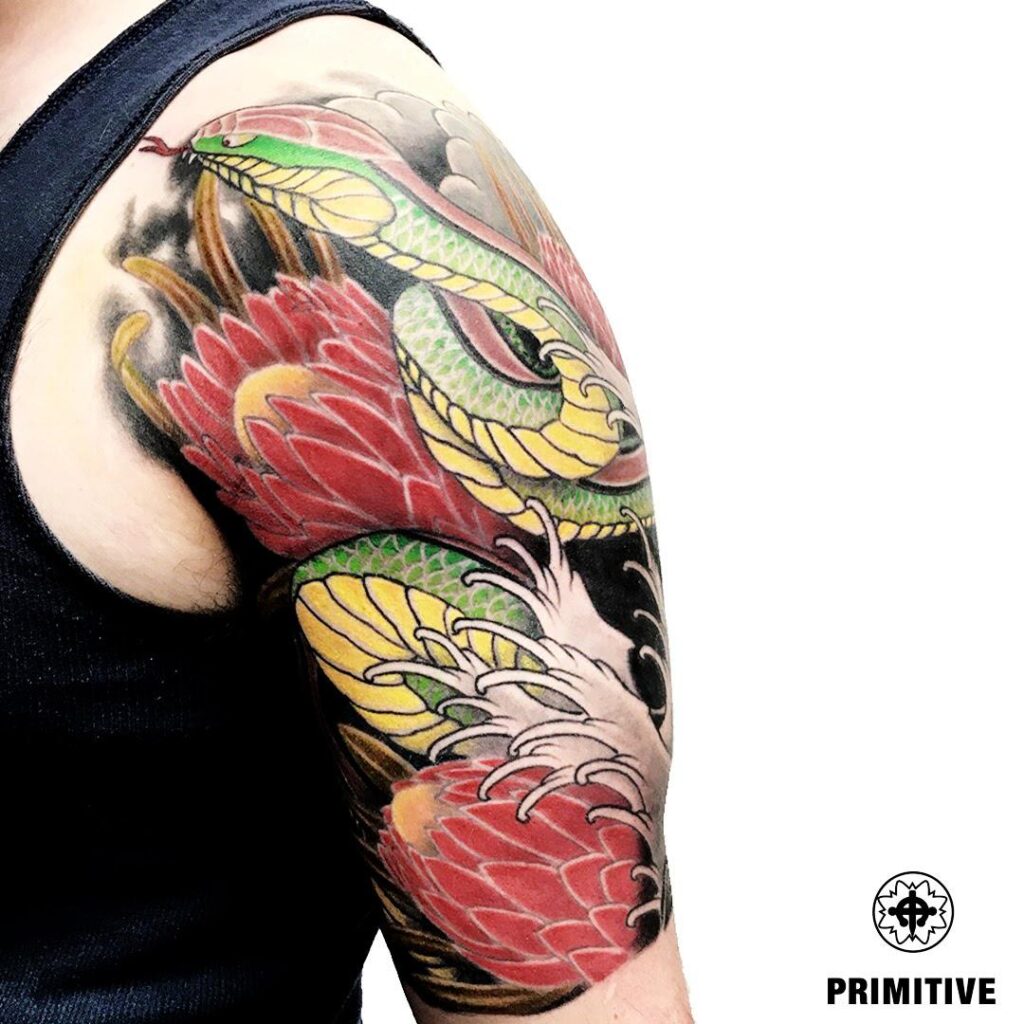
- Follow the limb. A snake is long and flexible, so it can spiral around an arm or leg in a way most subjects can’t. We draw the coils to follow the muscle so the body of the snake reads from every angle.
- Choose the flowers. Snakes are commonly paired with peonies, chrysanthemums or cherry blossoms. Each brings its own season and meaning; see our guide to chrysanthemums, peonies and maple leaves.
- Pick the mood. A calm, closed-mouth snake feels protective. An open mouth, fangs and a raised head feel aggressive. A white snake leans towards luck and Benzaiten.
- Think big picture. Snakes combine well with samurai, Hannya masks and skulls, and can link pieces into a full arm sleeve, a leg sleeve or a full back tattoo.
Getting a hebi tattoo in Perth
A wrapping snake sleeve takes several sessions, and each one needs time to heal before the next. Clients on FIFO rosters, in regional WA, or flying in from Sydney and Melbourne can plan their sessions around their time in Perth. Some clients also choose traditional tebori hand tattooing for parts of the work.
Want a snake that is drawn for your body rather than copied from a flash sheet? Book a Japanese tattoo consultation in Perth, or read more about the history of Japanese tattoos.
Sources
- nippon.com, “Year of the Snake: Five Shrines to Visit in 2025” (snake beliefs, Benzaiten and Ugajin, Iwakuni white snakes)
- nippon.com, “Tales from Kojiki: Susanoo and the Eight-Headed Serpent Yamata no Orochi”
- Japan Tourism Agency multilingual commentary database (mlit.go.jp), “Izumo: The Land of Myths”
- nippon.com, “Shichifukujin: Japan’s Seven Gods of Fortune” (Benzaiten)